Roots and Seasons: Why We Think We’re Not Creative
When you grow up in Michigan, winter isn’t optional.
It’s long and It’s snowy. It’s cold enough that you learn early how to bundle up properly before heading outside. Snow days are part of life. Sledding hills become neighborhood landmarks. Ice skating feels normal.
And when spring finally arrives, forty-five degrees feels warm enough for shorts.
That was my childhood baseline.
Later, when my family moved to California, everything changed. There was no snow. Flowers bloomed in winter. January looked more like early spring. It felt strange at first, almost unreal.
Now that I live in Idaho, I see both sides. There’s enough snow to stir childhood memories, but not quite the same intensity as those Michigan winters. It feels like a bridge between where I started and where I’ve landed.
Over time, I’ve realized something simple but important: we don’t experience seasons only through temperature. We experience them through memory.
Our roots shape what feels normal.
Table of Contents
Growing Up With Long Winters
When the Landscape Changes
Why Our Roots Shape What Feels Normal
What Our Roots Teach Us About Creativity
Reframing the “I’m Not Creative” Story
What About You?
FAQs About Roots and Creativity
Growing Up With Long Winters
When winter is part of your daily life for years, it doesn’t feel dramatic. It feels expected because it's all you know.
In Michigan, snow boots by the door were standard. Shoveling driveways was routine. You learned how to drive in snow before you learned how to complain about it.
Winter wasn’t something we debated. It was something we lived with.
Because of that, my understanding of “cold” formed early. What felt freezing to someone from a warmer climate felt manageable to me. Forty-five degrees in March meant relief. It meant change was coming. It meant stepping outside without heavy layers.
Childhood seasons create a baseline.
And we carry that baseline with us, even when the scenery changes.
When the Landscape Changes
Moving to California disrupted that baseline.
Winter looked different. It felt different. There were no snow days. No icy sidewalks. No waiting for the first big melt.
Instead, there were flowers in bloom and mild afternoons in January. At first, it felt almost confusing. My body still expected one thing, but the landscape delivered another.
It wasn’t better or worse. It was simply unfamiliar.
That contrast made something clear: the way we experience a season isn’t just about what’s happening outside. It’s about what we’ve learned to expect.
When the landscape changes, our internal reference points don’t disappear overnight.
They adjust slowly.
Why Our Roots Shape What Feels Normal
Where we grow up quietly influences how we interpret the world.
Temperature is objective. But comfort is relative.
Forty-five degrees means one thing in Michigan and something entirely different in California. The number doesn’t change. The context does.
The same is true beyond weather.
The routines we grow up with, the way people respond to challenges, the rhythms of daily life - they all become part of our internal compass. We measure new experiences against old ones, often without realizing it.
That’s why certain places feel instantly comfortable. They mirror something familiar.
It’s also why certain changes feel unsettling. They disrupt our baseline.
Roots don’t disappear just because we move. They travel with us. They influence what feels safe, surprising, or worth celebrating.
And this idea doesn’t stop with seasons.
What Our Roots Teach Us About Creativity
The belief that we’re “not creative” often has roots too.
Most people didn’t wake up one morning as adults and decide they weren’t creative. That idea usually started much earlier.
Maybe it was a comment from a teacher.
Maybe it was comparing your drawing to someone else’s.
Maybe it was being told to focus on something more practical.
Over time, those moments can quietly become part of your internal baseline - just like winter did for me growing up in Michigan.
You start to believe certain things are simply true.
“I’m not artistic.”
“I’m not good at that.”
“That’s for other people.”
But just like temperature feels different depending on where you grew up, creativity feels different depending on what you were told early on.
If your childhood included encouragement, art supplies, and freedom to experiment, creativity may feel natural.
If it included criticism, comparison, or pressure to perform, creativity may feel risky.
That doesn’t mean you aren’t creative.
It means your roots shaped your expectations.
Reframing the “I’m Not Creative” Story
Here’s something worth considering: The belief that you’re not creative might be a memory - not a fact.
It might be something you absorbed at a time when you didn’t yet have the perspective to question it.
Just like I once believed winter had to look a certain way, we sometimes believe creativity has to look a certain way too.
Big. Talented. Professional. Effortless.
But creativity can be much simpler than that.
It can look like choosing colors that feel good.
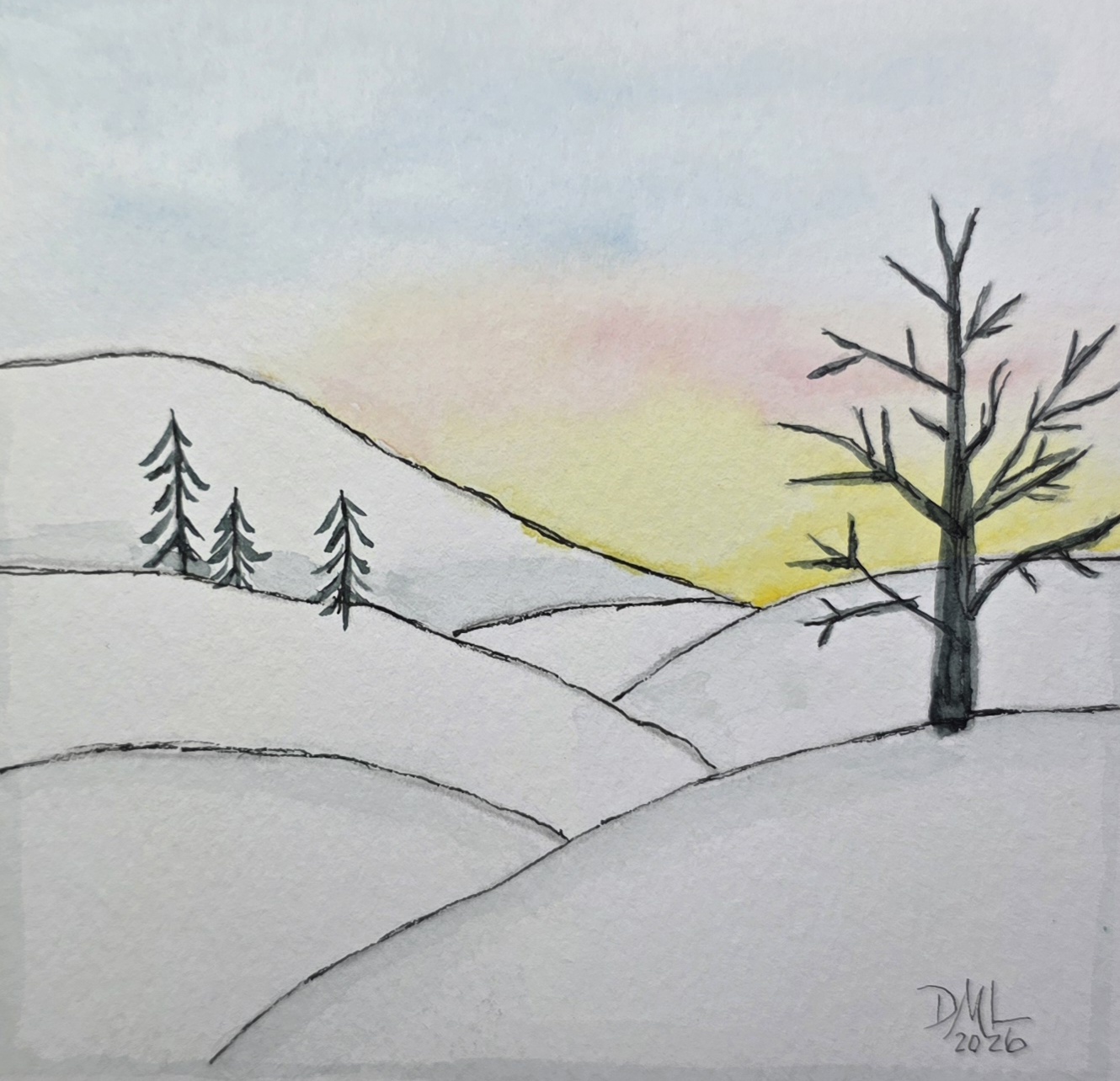
It can look like sketching a winter tree.
It can look like trying something new without knowing how it will turn out.
When we allow ourselves to try again - without the old expectations attached - we often discover something surprising.
The desire to create was there all along.
It may have been covered by comparison or doubt, but it didn’t disappear.
What About You?
Think about the first winters you remember.
Were they snowy? Mild? Windy? Gray? Bright and crisp?
Now think about the first time you decided you weren’t creative.
Do you remember when that started?
Was it a moment? A comment? A comparison?
Sometimes reflecting on where we began helps us understand where we are.
Maybe the story you’ve been telling yourself isn’t the whole story.
Maybe it’s just a root that formed early and never got examined.
Seasons change. Landscapes change. We move. We adjust.
And sometimes, when we look closely at our roots, we realize we’re capable of more than we assumed.
Frequently Asked Questions
Why do childhood seasons feel so vivid?
Childhood experiences form strong sensory memories. Weather, routines, and repeated seasonal patterns create a baseline that shapes how we interpret similar experiences later in life.
How does where we grow up shape our perspective?
Where we grow up influences what feels normal. Climate, daily rhythms, and early feedback become part of our internal reference system, shaping how we respond to change.
Why do so many people believe they aren’t creative?
Often, that belief formed early. Comments, comparison, or lack of encouragement can shape how someone sees their abilities. Over time, that belief can feel like fact, even if it isn’t.
Can creativity return later in life?
Yes. Creativity isn’t something reserved for childhood. It can re-emerge when pressure is removed and curiosity is allowed to take the lead.
Roots and Seasons
The places where we begin matter.
They shape what feels normal. What feels comfortable. What feels possible.
But they don’t have to define us permanently.
Just as winter looks different depending on where you stand, creativity can look different depending on what you were taught to expect.
Sometimes all it takes is trying again to discover that you’ve been creative all along.
If you’d like to paint the above winter scene with me, the full tutorial is now on YouTube. You can watch it here:
And if you’re not already receiving The Creative Heart Journal each Friday, you’re welcome to join. It’s free, simple, seasonal, and designed to help you slow down just a little. You can sign up here: https://creativewannabes.com/sign-up
When you sign up, you'll also immediately receive my Whimsical Bird Trio tutorial and watercolor starter pack as my thank you gift.

