Watercolor Lavender Tutorial for Beginners - Paint a Lavender Pot with a Bee
There's a particular kind of calm that comes with lavender. Not just the plant itself, but everything it carries with it - the scent, the color, the quiet buzz of a bee moving unhurriedly from bloom to bloom. If you've ever walked past a lavender patch in summer and felt your whole body exhale, you already know what I mean.
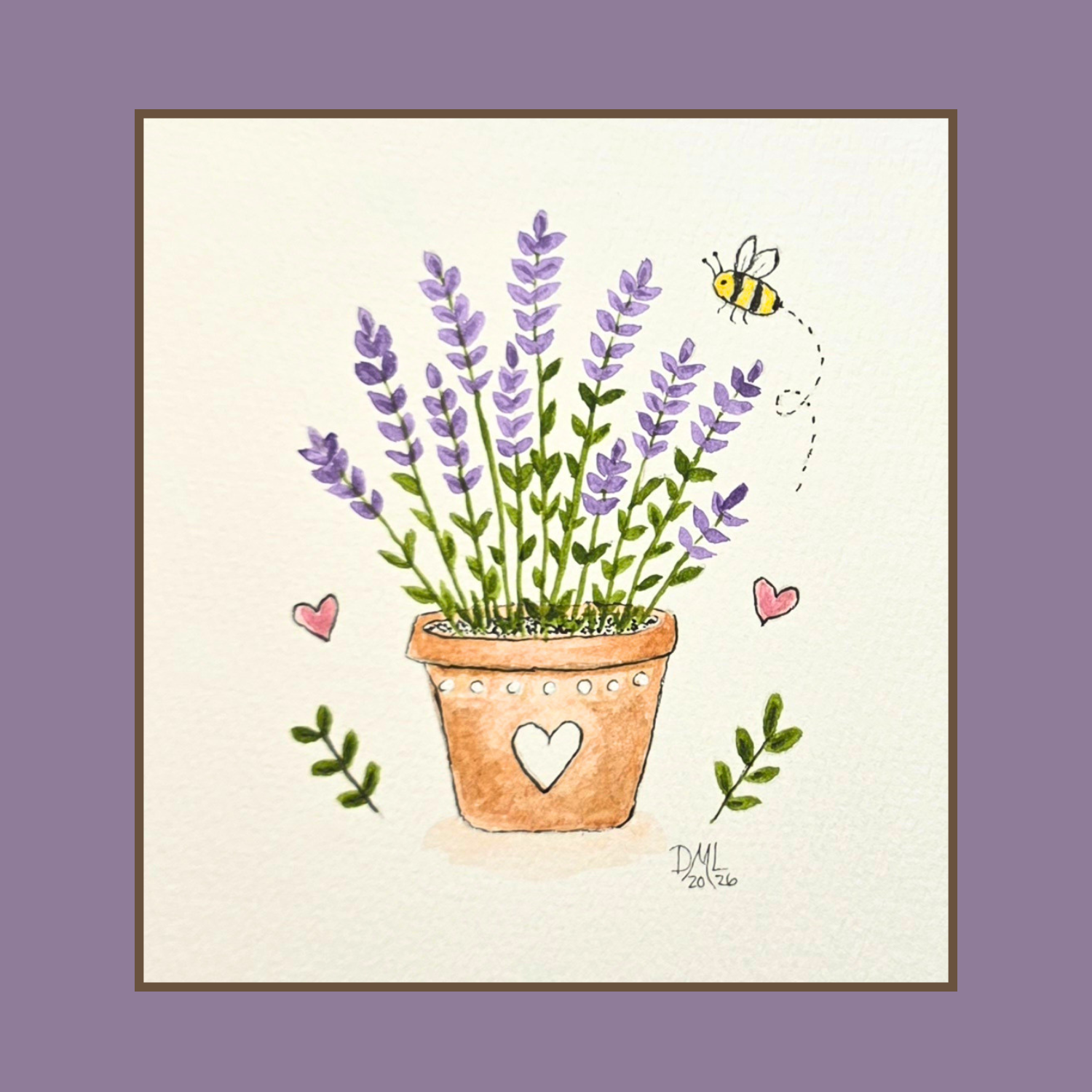
This week in the Creative Heart Journal, we're painting a lavender pot with a little honeybee, and this watercolor lavender tutorial for beginners is designed to be as relaxing to paint as lavender is to smell. No experience needed. Just five colors, a brush, and a little bit of time that belongs entirely to you.
Why Lavender Makes the Perfect Beginner Watercolor Subject
Lavender is one of those subjects that looks impressive but is genuinely forgiving to paint. The blooms are small and clustered, which means slight imperfections actually add to the charm rather than detract from it. The stems are simple vertical lines. The pot is a basic rounded shape. And the whole composition - plant, pot, bee - fits naturally into a small, centered square that beginners can tackle without feeling overwhelmed.
In other words, this is exactly the kind of subject that gives you an early win. And early wins are everything when you're just beginning.
The Lavender & Honey Palette - 5 Colors, All You Need
One of the things I love most about this week's painting is how much personality five colors can carry. Here's the palette we're working with:
Violet Bloom (Carbazole Violet) - for the lavender blooms
Garden Stem (Sap Green) - for the stems and leaves
Terra Pot (Transparent Red Oxide) - for the terracotta pot
Honey Bee (Hansa Yellow Light) - for the little bee
Petal Pink (Quinacridone Rose) - for the small hearts
These are Daniel Smith professional watercolors, but any beginner set with similar colors will work beautifully. The goal is never perfect supplies - it's just showing up and beginning.
One mixing tip worth knowing: Terra Pot and Violet Bloom are an unexpected pair, but mix a touch of one into the other and you'll get the soft shadow color tucked under each lavender stem. Don't rinse your brush too well between the two - a little muddiness here is exactly right.
Painting Lavender Is a Little Like Remembering
Here's something I noticed the moment I sat down to paint this week's tutorial. It wasn't just my hands that showed up - it was everything else too.
I grew up in Michigan and have lived in Idaho for a few years now, and lavender grows prolifically in both places. Along roadsides, in front yards, in big rambling patches that seem to ask nothing of anyone. I love everything about it. Lavender lotion before bed, lavender soap by the sink - if a product carries that scent, I'm reaching for it first.
I used to walk with my daughter past lavender patches on summer evenings, trying not to flinch at all the bees doing their work nearby. Just letting them be. And as I painted this week, I wasn't really in my studio anymore. I was back on that path, in the summer heat, with that clean quiet scent slowing everything down.
That's what this watercolor lavender tutorial for beginners is really about. Not just the painting. The remembering. If you find yourself drifting somewhere while you paint today - a place, a person, a summer that felt simpler - just let it happen. That's not distraction. That's the painting working exactly the way it's supposed to.
A Small Tribute to the Bee
I'll be honest - bees used to make me nervous. Still do, a little. But without them, we wouldn't have lavender. We wouldn't have a lot of the things we love, actually. The bee in this painting is a small tribute to that quiet, necessary work. The kind that happens without applause, without recognition, without anyone stopping to say thank you.
There's something in that worth thinking about as you paint today.
How to Get Started With This Watercolor Lavender Tutorial for Beginners
If you're new here and not sure where to begin, the best first step is to grab the free Creative Heart Journal - it's delivered to your inbox every Friday and includes the full color palette, mixing tips, and a 6-step tutorial guide for every issue. You can sign up and receive a free Whimsical Bird Trio starter pack immediately at creativewannabes.com/sign-up.
If you'd like to try a free live painting class before committing to anything, I'd love to have you join us - each month I teach a free 90-minute online class designed specifically for beginners. You can reserve your free seat at https://kitchentablecreativity.com/free-workshop
And here is the complete, step by step video tutorial on YouTube:
FAQs About Painting Lavender in Watercolor
Do I need expensive paints for this watercolor lavender tutorial for beginners?
Not at all. While I use Daniel Smith professional watercolors, any beginner watercolor set with a purple, green, orange, yellow, and pink will work beautifully. The most important thing is that you enjoy the colors you're working with.
What if my lavender blooms look imperfect?
That's actually the goal. Lavender blooms are naturally clustered and slightly irregular, which means your painting will look more realistic - and more charming - with a little imperfection built in. Don't try to control every edge.
Can I trace the lavender outline instead of drawing it freehand?
Absolutely. Tracing is a completely valid beginner technique and one I encourage often. It removes the fear of drawing and lets you focus on the part that matters most - the color and the feeling.
How long does this painting take?
Most beginners complete this tutorial in 30–45 minutes. It's designed to fit into a real afternoon, not a full art class commitment.
What is the best paper for beginner watercolor painting?
A cold press watercolor paper of at least 140lb weight is ideal. It holds water without buckling and gives your colors room to bloom naturally. You don't need anything fancy - just avoid regular printer paper, which doesn't absorb watercolor well.
Final Thoughts
Lavender doesn't ask permission to grow. It just shows up - along roadsides, in front yards, in patches so generous they stop you mid-walk just to breathe them in.
This watercolor lavender tutorial for beginners is an invitation to do the same. Show up. Pick up your brush. Let the color do what color does. And if a memory drifts in while you're painting, let it stay awhile.
That's the whole point.
If you'd like the full Creative Heart Journal with this week's complete painting guide delivered free to your inbox, sign up at creativewannabes.com/sign-up New issue every Friday at noon.

